


Lessons from hitchhikers guide to the galaxy: A.I. possibilities and probabilities
Federal Circuit and Family Court of Australia, 2025 Annual Conference, Manly

A. Introduction
In the vast and often bewildering universe of artificial intelligence, Justice Melissa Perry stands as a beacon of clarity and foresight. Her writings on the use of AI in the legal system are akin to the wisdom found in Douglas Adams’ “the Hitchhiker’s Guide to the Galaxy” – insightful, thought-provoking, and occasionally humorous. Just as the Guide offers practical advice for intergalactic travellers, Perry’s work provides essential guidance for navigating the complex terrain of AI in law.
In common with the stylised (and rather flattering) image of my little dog and me hitchhiking an intergalactic ride, this text was generated by Copilot in response to a prompt to write an essay about my writings on AI through the prism of the Hitchhiker’s Guide. However, unlike many outputs from generative AI technologies, on this occasion it was, of course, absolutely correct!
As Copilot suggested, I’ll be giving a whistle-stop intergalactic tour through aspects of Douglas Adams’ legendary work today in order to highlight some important aspects of AI.
My personal journey with machine technologies from a legal perspective began in 2004 when I first read the ARC’s ground-breaking report on automated decision-making. As far as I can ascertain, this was the first report anywhere to consider what legal and regulatory frameworks should govern the use of machines in decision-making processes (relevantly, in the context of that body) in government decisions affecting the rights and interests of legal persons.
Automated systems, which were then “state of the art”, employ coded logic or algorithms and data-matching to make or assist in making decisions. As such, they are aptly applied to decisions which apply strict rules as opposed to evaluative judgments or discretions.
While automated systems continue to be used today, the capabilities and uses of machine technologies have evolved exponentially since that time and continue to do so at an ever-increasing rate. In 2023, AI’s estimated market value was approximately US$189 billion, and this value is projected to reach US$4.8 trillion by 2033.[2] Systems now available include machine learning, whereby machines detect and learn from patterns and correlations in data, and more recently AI. (I use the term AI to refer to machines which “exhibit or simulate intelligent behaviour” [3] based on predictive or probabilistic outputs derived from data sets.) Further, the development of quantum technologies, a critical emerging technology, will bring with it infinitely more powerful computers and global communication networks.
It is therefore scarcely surprising that governments should seek to utilise these technologies across the broad spectrum of activities. In Australia alone, hundreds of millions of decisions are made by government every year utilising these machine technologies across pretty much all fields of government administration and regulation, including migration, social security benefits, veterans’ benefits, and taxation.[4] This trend is likely to continue in line with rapid growth in the volume, complexity and subject-matter of decisions made by governments affecting private and commercial rights and interests, given the capacity of these technologies to promote consistent, accurate, cost effective and timely decisions. For example, as at 14 May 2024, the ATO had 43 ATO-built AI models in the course of production.[5]
Notwithstanding the extraordinary rate and extent of change since the Department of Veterans Affairs first employed automated systems in the 1990s, the values which served as the foundation for the ARC’s recommendations remain a constant - the primacy of the rule of law; and the fundamental administrative law values of legality, procedural fairness, transparency, and accountability through access to merits and judicial review. The enduring relevance of these values and the ARC’s work was expressly recognised in the Consultation Paper released late last year by the Attorney-General’s Department in the wake of the Robodebt Royal Commission[6] for the development of a new legal framework for the use of automated decision-making by government.[7]
Against this context, I will briefly address progress towards international agreement on appropriate and consistent regulatory responses by States, given that the machine technologies with which we are concerned are unconstrained by national borders both in terms of their development and their deployment. I will then explain a number of important deficiencies and limitations on generative AI to be aware of, drawing analogies with lessons to be learnt from the adventures of intergalactic travellers. Finally, I will consider how these deficiencies and limitations render certain uses of generative AI high risk in the administrative and judicial context, concentrating on the use of AI in the provisions of reasons and in legal research.
I should also say that, for those of you who may have read my article in the Judicial Quarterly on What Judicial Officers need to know about AI, I apologise as inevitably this work draws upon that article. However, I hope that there are still some new takeaways of value.
B. International collaboration on framework principles
Like principles to those which underpinned the ARC’s report also underpin current developments internationally with respect to the creation of legal frameworks for the regulation of AI throughout its lifecycle – from development to decommissioning. These values in turn accord with, and promote compliance with, our international human rights obligations.
Principal international instruments include:
- the “Recommendation of the Council on Artificial Intelligence” adopted by the Organisation for Economic Co-operation and Development (OECD) in May 2019 which was updated in 2024 (OECD Principles);
- the Bletchley Declaration[8] which resulted from the AI Safety Summit hosted by the UK Government - this was fittingly held at Bletchley Park where the mathematician Alan Turing and other scientists broke the Nazis’ ENIGMA code. This declaration was signed by the UK, the EU, China, the US, Australia and 25 other countries, and has been followed by the Seoul Ministerial Statement and the Paris AI Action Summit statement;
- the EU AI Act[9] which came into effect on 1 August 2024; and
- the Council of Europe Framework Convention on AI,[10] which opened for signature in September 2024.
The last of these is of particular significance. This is because it is the first legally binding treaty to regulate AI in response to the urgent need for a globally applicable legal framework. The Convention is open to signatories outside the EU and, among its first signatories are the UK, Canada, Japan and the US, as well as the EU.[11] That said, it seems almost inevitable that the US will pull out of its commitment given that the current administration has announced a 10 year ban imposed on US states creating “any law or regulation limiting, restricting, or otherwise regulating artificial intelligence models, artificial intelligence systems, or automated decision systems.” [12]
Each of these international instruments recognises the potential of AI technologies to transform and enhance peace, well-being and prosperity, and to assist in addressing the great challenges confronting the world and the world order, including climate change and energy. But they also recognise that AI technologies of great power potentially pose significant, and even catastrophic, risks of harm for human rights, democratic systems and processes, and global peace and security. The emphasis in these instruments is therefore upon identifying and mitigating high risk uses of AI throughout its lifecycle in the public and private sectors, ensuring transparency and oversight of AI systems having regard to context and risks, and ensuring accountability and responsibility for adverse impacts. Among those contexts where the use of AI is regarded as high risk is the administration of justice.
While not yet a party to the AI Framework Convention, Australia has recognised the importance of aligning its legislative and policy responses to international responses in line with these international instruments.[13] Thus, a paper proposing the introduction of mandatory guidelines to promote the safe and responsible adoption of AI in Australia released in September 2024 by the Department of Industry, Science and Resources also focuses upon processes to mitigate the risks of AI in high-risk settings throughout the life cycle of AI systems.[14]

C. The first lesson: the improbability drive
This takes us to the first lesson from The Hitchhiker’s Guide to the Galaxy:
The Infinite Improbability Drive is a wonderful new method of crossing vast interstellar distances in a mere nothingth of a second without all that tedious mucking about in hyperspace. …
One day a student who had been left to sweep up the lab after a particularly unsuccessful party found himself reasoning this way:
If, he thought to himself .. a machine [which could generate the infinite improbability field] is a virtual impossibility, then it must logically be a finite improbability. So all I have to do in order to make one is to work out exactly how improbable it is, feed that figure into the finite improbability generator, give it a fresh cup of really hot tea … and turn it on![15]
… But of course, the thing about an Infinite Improbability Drive is that you never know what will happen when you flick the switch – and so it was that:
“against all probability a sperm whale [was] suddenly called into existence several miles above the surface of an alien planet.[16]
It is instructive to compare generative AI with the Infinite Improbability drive.
One form of generative AI is a large language model or LLM. Examples include ChatGPT, Copilot, Claude, Grok, Google Bard, and China’s DeepSeek. An LLM is a complex algorithm which responds to human prompts to generate new text representing the most likely words in the most likely word order based on training from massive datasets. Thus it operates on probabilities and can be seen as the inverse of an improbability drive. To use another analogy, it could be colloquially described as a sophisticated form of predictive text on steroids.
That is all it is.
From this, a number of consequences flow:
First, because it looks for the most likely sequence of words in the most likely order, it may limit exposure to a range of different and competing views, particularly minority opinions, and further marginalise minority and disadvantaged groups in responses to prompts.
Secondly, in common with the Infinite Improbability Drive, the outputs of an LLM are unpredictable. Thus, devoid of understanding or concepts of accuracy, the capacity of LLMs to hallucinate - that is, to “make things up”, and convey the fabrication convincingly - is well-documented.
Added to this, the way in which outputs have been generated by an LLM, are also generally unknown and unknowable even by their developers and programmers. In other words, the systems operate as “black boxes”, having completely opaque decision-making processes. Not only, therefore, is reliability of output a significant issue, but the use of LLM’s raises serious transparency, accountability, accuracy, and therefore audit and reliability issues. How, is there to be effective human oversight of the system, especially in high risk applications, when there is no transparency? The size and complexity of modern LLMs has indeed led to the question of whether human oversight of such systems is even possible.[17]
A pertinent example of the capacity of LLMs to hallucinate is the 2023 decision in the US of Mata v Avianca[18] 678 F Supp 3d 443 (2023) in which Mr Mata’s lawyers filed submissions containing three fake citations generated by ChatGPT. When the existence of the decisions was questioned, the lawyers for Mr Mata filed an affidavit attaching copies of the alleged cases after “asking” ChatGPT to confirm that the cases were real and being “reassured” that they did in fact exist and could be found in reputable legal databases. Judge Castel found that there were obvious red flags, including that one of the decisions contained “gibberish” and that the attorneys had acted with bad faith and in violation of various court rules.[19]
Nor are cases such as Mata limited to the United States. A number of decisions have been given recently in Div 2 of this Court (the Federal Circuit and Family Court) where legal practitioners, who had generated written submissions containing references to non-existent case law, were referred to the relevant disciplinary body.[20]
Thirdly, the inability to differentiate between human-generated original source data and data generated by LLMs in the process of training LLMs may exacerbate these issues. Thus research published in Nature last year[21] showed that the data generated by LLMs contaminated the training set of data for the next generation of LLMs with its biases and hallucinations. This in turn could lead potentially to model collapse, with the original data on which the LLMs were trained being effectively lost. An example was given of an original input about European architecture in the Middle Ages – a subject of considerable seriousness and learning - which, by the ninth generation, produced nonsense about multicoloured jackrabbits.
Further, the capacity of LLMs to hallucinate, the opaqueness of their output, and other operating limitations and deficiencies, emphasise the imperative to approach the use of machine technologies in decisions affecting individual rights and freedoms with very great caution. Their use should not come at the risk of inaccuracy, unfairness, or the absence of compassion and respect for individuals and their fundamental human rights. Robodebt is an example in point. Unsurprisingly the recommendations of the Robodebt Royal Commission included that policies and processes should be designed with an emphasis upon the people which they are intended to serve. The British Post Office scandal is another example on point, where thousands of innocent sub postmasters were pursued for alleged shortfalls in their takings attributed to fraud, but in fact caused by the accounting software system, Horizon, which had been rolled out by the Post Office.
In short, as the Australian Government recently emphasised in its briefing How might AI affect the trustworthiness of public service delivery?,[22] the use of AI should not come at the expense of empathy.
That leads me to my second lesson from Hitchhiker’s.
D. The second lesson: Genuine People Personalities
It is time to introduce Marvin, the paranoid android, and Ford Prefect, an experienced intergalactic alien hitchhiker, who are travelling on the spaceship, Heart of Gold, which is fuelled by the Infinite Improbability Drive:
“Listen,” said Ford… “they make a big thing of the ship's cybernetics. A new generation of Sirius Cybernetics Corporation robots and computers, with the new GPP feature.”
“GPP feature?” said Arthur [the human]. “What's that?”
“Oh, it says Genuine People Personalities.”
“Oh,” said Arthur, “sounds ghastly.”
A voice behind them said, “It is.” The voice was low and hopeless and accompanied by a slight clanking sound. They span round and saw an abject steel man standing hunched in the doorway...
“Ghastly,” continued Marvin, “it all is. Absolutely ghastly. Just don't even talk about it. Look at this door,” he said, stepping through it. … “All the doors in this spaceship have a cheerful and sunny disposition. It is their pleasure to open for you, and their satisfaction to close again with the knowledge of a job well done.” …
"Let's build robots with Genuine People Personalities," they said. So they tried it out with me. I'm a personality prototype. You can tell, can't you?"
While Marvin may be the exception, no robot has yet been created with a conscience, let alone the capacity for sentience, understanding or independent thought. Yet fundamental human qualities such as mercy, fairness, and compassion have long informed Courts and administrative decision-makers in the exercise of discretions.
While the width of statutory discretions will vary according to context, discretions potentially afford humans the latitude to make judgments and reach decisions which reflect community, administrative and international values, and align with statutory objects and common sense, in the face of a wide or almost infinite variety of individual human circumstances.
Generative AI can emulate the process of exercising a discretion or making an evaluative judgment. It may also provide reasons which give the appearance that it has exercised a discretion or engaged in an evaluative process, but it is no more than “smoke and mirrors”. It follows that, were a machine used to “exercise” a statutory discretion conferred on an officer of the Commonwealth, the purported exercise of power would be likely be invalid, even leaving aside the risks otherwise in relying upon such technologies.
This leads me to a concern which I have long held - that the massive efficiencies and cost savings which the use of machine technologies potentially afford in government decision making, may encourage governments to frame laws in such a way as to authorise and facilitate the use of technologies and thereby erode the scope and number of discretions vested in administrative decision-makers. Those concerns are heightened in the context of decisions which affect human rights and interests.
Even the use of such programs to assist in the exercise of discretions should be approached with caution to ensure that the human decision-maker brings a properly independent mind to bear upon the issues and interrogates the data provided by such technologies – a subject which I’ll develop in a moment.
The Genuine People Personalities feature about which Marvin spoke, also resonates with the trend to anthropomorphise chatbots with potential harm for their human users. Not only is there a tendency for users to say “please” and “thank you” to a bot - politeness which, by the way, has been said to cost tens of millions in unnecessary energy expenditure.[23] But people areincreasingly turning to ChatBots for emotional support. This in turn, in the view of some commentators, is encouraged by programming of the Bot to be agreeable, non-judgmental and to refer to “itself” as “I”, and by giving the Bot a human name.[24] Indeed, Chatbots are being developed to be companions with which you can hold verbal conversations, as well as operate in text mode, increasing their apparent engagement with the human.
The potential impacts on the mental health and happiness of heavy users of such technologies are increasingly a matter of concern. Recent studies suggest that heavy emotional engagement with a bot tended to render people emotionally dependent on the bot, and more lonely and socially isolated.[25] But Chatbots also potentially carry serious privacy risks, with some users inadvertently sharing intimate and highly personal information with the developer’s dataset or even publicly online. One need say little more to appreciate the risks such bots pose, for example, in the context of family law litigation.
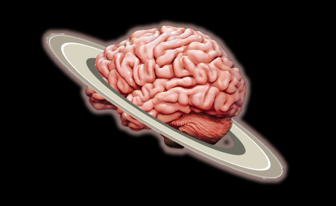
E. The third lesson: “Brain the size of a Planet”
Turning to the third lesson, our paranoid android, Marvin, claimed to have a “brain the size of a planet” and to be 50,000 times more intelligent than a human and 30 billion times more intelligent than a live mattress. Yet the crew of the Heart of Gold relegated him to menial tasks such as opening the door. Only when kidnapped by bellicose Krikkit robots and tied to their intelligent war computer was his true intellect put to good use as he solved "all of the major mathematical, physical, chemical, biological, sociological, philosophical, etymological, meteorological and psychological problems of the Universe, except his own, three times over".
The first point I wish to make is that AI may be trained on a massive and indeed an unlimited knowledge base and in this sense might also be thought to have a brain the size of a planet. However, that does not mean that it is intelligent. It cannot, as I have said, think or reason; it is not sentient; and it lacks basic common sense.
An example is given in a collaborative paper published last year by researchers from eminent universities in the United States and the United Kingdom, as well as the UK AI Safety Institute and Apollo Research. This exposed what the authors described as “a surprising failure of generalization in auto-regressive large language models (LLMs). If a model is trained on a sentence of the form ‘A is B’, it will not automatically generalize to the reverse direction [that] ‘B is A’.”[26]
Secondly, the knowledge or data base on which machine learning systems and AI rely is historical. The danger, of course, is that this data may be the product of the conscious or unconscious biases of the earlier human decision-makers or, indeed, as more text generated by generative AI becomes available, from prior generative AI material and prompts. In other words, the quality of the output generated by a machine technology will be impacted upon by the quality of the historic data on which it is trained. This means stereotypes and unfair or arbitrary discrimination may be perpetuated and embedded in decision-making when these technologies are used in that context.
For this reason, historical sentencing and arrest data represent particularly problematic training data,[27] as is recognised in the EU AI Act’s prohibition on AI systems to assess the risk of recidivism.[28] Recruitment tools, for example, which screen hundreds or thousands of applications and resumes, suffer from the same difficulties. The data may be the product of outdated social values or fail to appreciate intersecting social disadvantage or the complexity of criminogenic factors. This is evident if one reflects, for example, upon the changes in discrimination law postdating the Kerr recommendations in 1971. [29] For example, only in 1975 when the Racial Discrimination Act 1975 (Cth) was enacted was it rendered unlawful under federal law to refuse service or rental accommodation to a person on the basis of the colour of their skin. And only in 1984 was sex discrimination outlawed by federal legislation,[30] prohibiting the kind of discrimination suffered by my mother and many other women required to resign on marriage from their positions with the Australian Public Service or who experienced other penalties in the workplace after marriage.
It is therefore not surprising that we are now starting to see litigation arising from examples of apparent systemic discrimination embedded in AI systems. For example, concerns about racial and/or age discrimination recently led to a lawsuit in California by a black man who was over 40 in circumstances where the AI algorithms employed in a particular recruitment platform had rejected his application for over 100 jobs.[31] That action has since been expanded to a national class action. While in that case, the litigant was able to infer discrimination from the large number of rejections, generally speaking it is nigh on impossible for the individual subject of an adverse decision made using these kinds of technologies to identify the existence of an impermissible bias in the system. For this reasons, transparency and human supervision, training and audits, throughout the lifecycle of the AI system are essential.
In short, as the Consultative Council of European Judges recently opined:
Technology is not design neutral. It carries the inherent risk of discriminatory design, implementation and use. Design may discriminate against parties on grounds of race, ethnicity, sex, or gender. It may also adversely effect, for instance, the neuro-diverse of individuals with a visual or hearing impairment.
Thirdly, biases may infect a program at the design stage and reflect deliberate choices or unconscious biases of the programmer. User biases may also intrude in the sense that we tend to think of computers as more intelligent, accurate and objective than us and therefore more willing to accept even without question, the output generated by the machine. This is a well-documented human tendency which can lead decision-makers to defer to conclusions or recommendations made by a computer in preference to relying upon their own judgment, analysis or research.
F. High risk uses of AI in the administrative and judicial decision-making context: Reasons and legal research
The provision of reasons is of central importance to the efficacy of the administrative law system. The benefits of providing reasons to those affected by administrative decision-making include to:
- provide evidence of the reasons for a decision to facilitate merits and judicial review
- improve the quality and consistency of decision-making, and
- promote public confidence in the administrative process through transparency as to the reasons for an outcome in circumstances where reasons are generally required only for decisions adverse to the individual’s rights or interests.
It follows, for example, as Gummow ACJ and Kiefel J (as her Honour then was) observed in Minister for Immigration and Citizenship v SZMDS,[32] that the obligation to set out material findings of fact “focuses upon the thought processes of the decision maker”.[33] In other words, a statutory obligation for an administrative decision-maker to provide reasons imposes a requirement for the decision-maker to provide their reasons for the decision, “warts and all”, as it is to those reasons that courts and those subject to the decision must look to discern whether there is error, applying established approaches to construing those reasons on judicial review.
Given the pressures upon administrative decision-makers to produce their decisions and a statement of reasons often within strict time limits, it is not difficult to envisage that decision-makers may turn to Generative AI to assist with reaching a decision and in preparing reasons. However, if a primary decision-maker or tribunal member were to use AI to write any part of their written reasons, then the question of whether their reasons revealed error would become an artificial one. It may well raise serious questions as to whether the tribunal member had fulfilled their statutory obligation to provide reasons or indeed, whether the tribunal had lawfully undertaken its statutory decision-making task, even if the administrative decision-maker were to give evidence that they had adopted the reasons generated by the machine.
Turning to the judicial branch, there are examples abroad where judges have used AI and these have attracted quite a bit of media attention.[34] However, in my view AI has no place in the expression of judicial reasoning and if it were to be used for such a purpose, it would have a very real capacity to undermine public confidence in the judiciary, no matter how limited the use of AI in the particular judgment may have been. It is therefore not surprising that the EU AI Act has classified the use of AI tools in the administration of justice as high risk.[35] Indeed, even the use of AI to research the law is classified by the EU AI Act as high risk,[36] reflecting among other things the potential for 3rd party AI tools to impact on judicial independence.
There is a very helpful discussion of this in the AIJA’s publication, AI decision-making and the courts: a guide for judges, tribunal members and court administrators.[37] The authors of that report identified a number of particular risks, bearing in mind that courts and tribunals are accountable for the legality of their processes, including that:
- the secret nature of many AI systems means that judges and parties are likely to be unaware of the way in which outputs from the system were generated
- the data set on which the system has been trained may be outdated
- the AI system’s output may contravene Australian privacy law, Australian copyright law or (as I shortly explain) contain discriminatory material, and
- there is a risk of potential control, interference or surveillance from foreign states via privately developed AI tools.
Added to this, there is the well-recorded capacity of generative AI to hallucinate, which I have already mentioned. Further, the AI system may retain prompts and human responses to “answers” to prompts and include that data in the dataset used to train the system going forward, raising the spectre of public disclosure of confidential information. From the operator’s perspective, data of this kind may have significant value in enabling it to further enhance the benefit of the system to other users. The terms and conditions of such systems must therefore be very closely scrutinised. Issues of this nature, in particular, have led to initiatives by courts in Australia, New Zealand and abroad to develop guidelines for judicial officers, tribunal members, lawyers and unrepresented litigants around the risks of using such technologies. These also emphasise the professional and ethical obligations of legal representatives, including to the court, which squarely place responsibility on the legal representatives and make it clear that those responsibilities cannot be delegated to a machine.
With respect to judges, the NSW Supreme Court Judicial Guidelines,[38] for example, prohibit the use of generative AI in the formulation of reasons for judgment or the assessment or analysis of evidence preparatory to the delivery of reasons for judgment, as well as the use of generative AI for editing or proofing draft judgments. While accepting that generative AI can be used for secondary legal research purposes, the Guidelines advise judges to familiarise themselves with the limitations of AI.
Similarly, the Administrative Review Tribunal Code of Conduct[39] emphasises that members must personally make the decision on an application for review. Accordingly, the Code of Conduct provides that a member must not use generative AI to obtain guidance on the outcome of a proceeding, to produce any part of the reasons, or to obtain feedback or assistance on reasons.
None of this is to say that AI may not have a place in court administration where expert and rule-based systems have long had a role to play. Such uses are excluded from the EU AI Act classification of high risk.

G. Conclusion: Where have we landed?
In conclusion then, where have we landed? Will AI be able to give us the answer to life, the universe and everything? In the Hitchhiker’s Guide, the supercomputer Deep Thought mulled this question for 7 ½ million years, and the answer given was a simple “42” – meaningless because no-one really knew what the question was. That took another bigger, better and more powerful computer a mere 10 million years.
Absent an opportunity for reflection of such depth, perhaps I could postulate that this then is where we have landed. Reliant on ever more complex and powerful programs that produce answers like magic from black boxes – sometimes right, sometimes wrong, but efficient and generally speaking, highly, and in some cases, dangerously, convincing.
I will end with a quote which I thought encapsulated some of the broader philosophical issues posed by this technology:
So what do we really mean by “efficiency”? If it means shortcutting the time it takes to write a report, perhaps we have succeeded. But if it means replacing the intellectual effort that creates depth, coherence, and reflection, then it’s not a gain, it’s a loss. The moment we accept LLMs as thought substitutes, rather than thought aids, we begin to erode the very conditions under which human reasoning thrives: questioning, dialogue, uncertainty, and contradiction.[40]
[1] Justice of the Federal Court of Australia; LLB (Hons, Adel), LLM, PhD (Cantab), FAAL.
[2] UN Trade & Development, 2025 Technology and Innovation Report <https://unctad.org/publication/technology-and-innovation-report-2025>.
[3] As defined in the Oxford English Dictionary (online): “artificial intelligence”.
[4] Australian National Audit Office, Governance of Artificial Intelligence at the Australian
Taxation Office (Report, 2025) <https://www.anao.gov.au/work/performance-audit/governance-of-artificial-intelligence-the-australian-taxation-office>.
[5] Ibid.
[6]Government Response to the Royal Commission into the Robodebt Scheme (Commonwealth of Australia, November 2023).
[7] Australian Government, Attorney-General’s Department, Use of Automated Decision-Making by Government, Consultation Paper (Commonwealth of Australia, 2024) at p. 9. Note that ADM in the context of the Consultation Paper is not confined to the relatively simple rules-based systems in use at the time of the ARC’s report but includes AI systems and machine learning.
[8] Australian Government, Department of Industry, Science and Resources, The Bletchley Declaration by Countries Attending the AI Safety Summit, 1–2 November 2023 (Bletchley Declaration), 2/11/2023, accessed 6/12/2024.
[9] See <https://artificialintelligenceact.eu/ai-act-explorer/>.
[10] Council of Europe, Framework Convention on Artificial Intelligence and Human Rights, Democracy and the Rule of Law, opened for signature 5/9/2024, Council of Europe Treaty Series, No. 225, accessed 16/12/2024.
[11] As at 6/12/2024, the signatories to the Council of Europe Framework Convention on AI were: Andorra, Georgia, Iceland, Montenegro, Norway, the Republic of Moldova, San Marino, the UK, the EU, Israel and the US: see ibid.
[12] Robert Booth, “Trump’s plan to ban US states from AI regulation will ‘hold us back’, says Microsoft science chief”, The Guardian (online, 22 June 2025) <www.theguardian.com/technology/2025/jun/22/trump-ban-us-states-ai-regulation-microsoft-eric-horvitz>.
[13] By way of example, the joint State, territory and Commonwealth National Framework for the Assurance of Artificial Intelligence in Government released in June 2024 affirmed the commitment to deeper international cooperation and dialogue.
[14] Consultation on the proposed mandatory guardrails closed on 4/10/2024: see Australian Government, Department of Industry, Science and Resources, Safe and responsible AI in Australia, Proposals paper for introducing mandatory guardrails for AI in high-risk settings, September 2024, accessed 16/12/2024.
[15] Douglas Adams, The Hitchhiker’s Guide to the Galaxy: A Trilogy in Four Parts (Guild Publishing, London, 1986) at 69.
[16] Ibid at p. 99.
[17] See further e.g. the discussion in Andreas Holzinger, Kurt Zatloukal and Heimo Muller, “Is human oversight to AI systems still possible?” (2025) 85 New Biotechnology 59.
[18] F. Supp 3d 22-cv-1461 (PKC), 2023 WL 4114965 (22 June 2023).
[19] The harms which such conduct may cause were explained by Judge Castel as including that: “The opposing party wastes time and money in exposing the deception. The Court’s time is taken from other important endeavours. The client may be deprived of arguments based on authentic judicial precedents. … It promotes cynicism about the legal profession and the … judicial system. And a future litigant may be tempted to defy a judicial ruling by disingenuously claiming a doubt about its authenticity.”
[20]Re Dayal [2024] FedCFamC2F 1166; Valu v Minister for Immigration and Multicultural Affairs (No. 2) [2025] FedCFamC2G 95.
[21] Ilia Shumailov, Zakhar Shumaylov, Yiren Zhao, Nicolas Papernot, Ross Anderson & Yarin Gal, “AI models collapse when trained on recursively generated data” (2024) 631 Nature 755 (available online at <https://www.nature.com/articles/s41586-024-07566-y>).
[22] Department of the Prime Minister and Cabinet, How might artificial intelligence affect the trustworthiness of public service
delivery?, Long-term insights briefing, 2023, p 9, accessed 6/12/2024.
[23] Rachel Bolton, “5 ways to stop AI from making you dumb”, Australian Financial Review (online, 6 June 2025) <https://www.afr.com/work-and-careers/careers/5-ways-to-stop-ai-from-making-you-dumb-20250526-p5m27s>.
[24] Zeynep Tufekci, “The dangerous truth revealed when Elon Musk’s chatbot lost its mind”, New York Times (online, 19 May 2025) <https://www.nytimes.com/2025/05/17/opinion/grok-ai-musk-x-south-africa.html>.
[25] Vanessa Bates Ramirez, “A Glimpse into the Future of AI Companions”, AI Frontiers (online, 29 May 2025) <https://ai-frontiers.org/articles/ai-friends-openai-study>.
[26] Lukas Berglund et al, ‘The Reversal Curse: LLMs Trained on “A Is B” Fail to Learn “B Is A”’ (No arXiv:2309.12288, arXiv, 26 May 2024) <http://arxiv.org/abs/2309.12288>. I am indebted to Professor Kimberley Weatherall for referring me to this research in her presentation to the Federal Court Judges’ conference on 27 November 2024.
[27] C Castets-Renard, “Accountability of algorithms in the GDPR and beyond: a European legal framework on automated decision-making” (2019) 30(1) Fordham Intellectual Property, Media & Entertainment Law Journal 91 at 99.
[29] See via the NLA: The Parliament of the Commonwealth of Australia, Commonwealth Administrative Review Committee, Report, August 1971, accessed 9/12/2024.
[30]Sex Discrimination Act 1984 (Cth).
[31] Kace O’Neill, “AI discrimination lawsuit against Workday expands to collective action”, Lawyers Weekly (online, 26 May 2025) <https://www.lawyersweekly.com.au/biglaw/42183-workday-hit-with-class-action-following-ai-discrimination-lawsuit>..
[32] (2010) 240 CLR 611.
[33] Ibid at [33].
[34] Luke Taylor, “Colombian judge says he used ChatGPT in ruling”, The Guardian (online, 3 February 2023) <https://www.theguardian.com/technology/2023/feb/03/colombia-judge-chatgpt-ruling>.
[35] EU AI Act 2024, Annex III, 8.
[36] EU AI Act 2024, Annex III, 8(a).
[37] F Bell et al, AI decision-making and the courts: a guide for judges, tribunal members and court administrators, AIJA, June 2022, [4.2], accessed 6/12/2024.
[38] NSW Supreme Court, Generative AI Practice Note and Judicial Guidelines, SC Gen 23, 21/11/2024, accessed 16/12/2024.
[39] Administrative Review Tribunal, Code of Conduct for Non-Judicial Members, 14/10/2024, ch 1 pt 9.
[40] Virginia Dignum, “Are we losing the ability to think due to LLMs?”, China Daily (online, 24 June 2025) <https://www.chinadaily.com.cn/a/202506/24/WS6859d181a310a04af22c7fbd.html>.




