- Home
- Activities
- Court Administration

Court Administration
Effective court administration is critical for successful judiciaries. It requires robust judicial leadership, clear governance, management and administrative structures, responsibilities and competences. Courts must protect their constitutional independence, whilst engaging with the other arms of government on a range of operational issues. To perform these functions, court require the ability to:
- Assess operational needs, develop and successfully advocate for adequate resources, and control their own budgets.
- Develop and manage core competency frameworks ensuring staff possess, or can be trained in the essential knowledge, skills and professional approaches required for a modern judiciary.
- Ensure consistency, transparency, and institutional knowledge in case handling, by developing, implementing, maintaining and updating procedural guides, such as internal manuals and Standard Operating Procedures.
APJP promotes best practice in court administration through regional workshops focused on mutual learning, strategic planning and acquisition of key court management skills. Building on learning and progress made during the regional workshops APJP will also support the implementation of country-led reform plans, including ongoing peer exchange, remote engagement, and targeted assistance focused on practical and scalable improvements across participating courts.
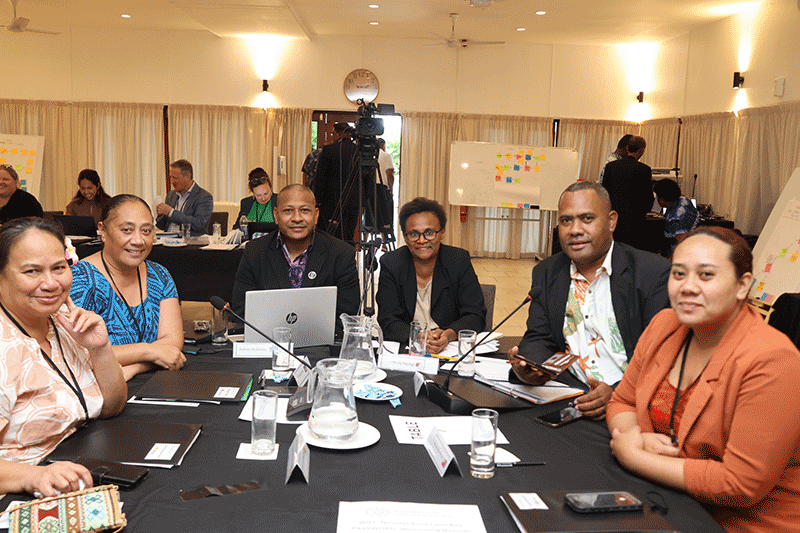
Court Administration Workshop, Solomon Islands, September 2026
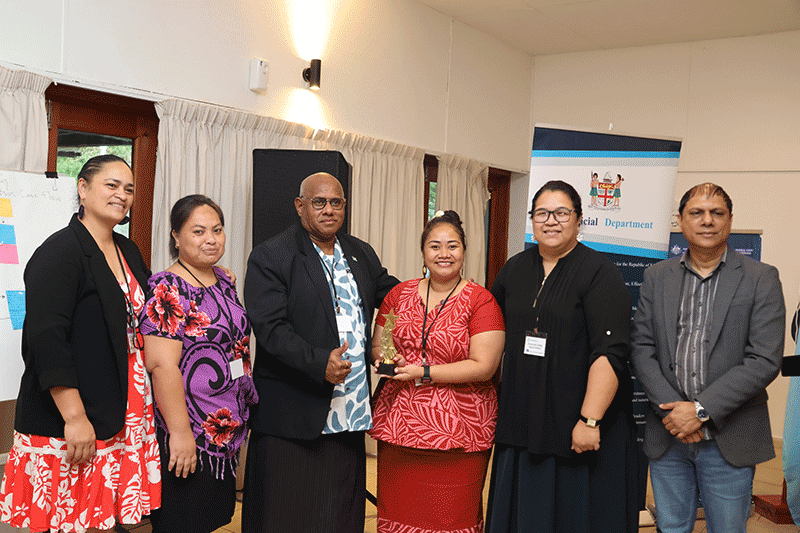
The first APJP Regional Court Administration workshop, held in the Solomon Islands, in September 2026, brought together 45 court officials from 15 Pacific Island nations to discuss different approaches and perspectives to the effective management of courts across the region. Day One of the workshop covered the core competency frameworks necessary to ensure staff possess the essential skills and professional ethics required for a modern judiciary, whilst Day Two dealt with the development of comprehensive Standard Operating Procedures (SOPs) and registry manuals to ensure consistency, transparency, and efficiency in case handling. Day Three addressed financial advocacy and the tools necessary to engage effectively with the Executive, turning budget requests into compelling business cases. The APJP will continue to engage with courts on the Action Plans and specific needs identified by courts in the course of the workshop.
A keynote address by the Chief Registrar of the High Court of Fiji, Tomasi Bainivalu, highlighted the essential functions of a modern court administrator. He stressed the overriding need to ensure the court can serve the public effectively and that judges have the support they need to perform their judicial role. In turn, this requires that resources are used appropriately, that staff are developed and supported, that systems operate consistently and fairly, and that institutional knowledge is retained over time.