- Home
- Activities
- Case Management

Case Management
The efficient and timely management of cases is regularly highlighted by courts as a key priority. Litigants facing lengthy delays in court proceedings, have less access to justice, which in turn negatively impacts their confidence in the legal system. Several causal factors inhibit higher and faster disposition rates and place significant pressure on judicial and registry officers. These include increasingly high and complex caseloads numbers beyond the reasonable capacity of existing judicial officers to handle; the multifaceted requirements and interpretations of due process; significantly limited resources and infrastructure to manage central and remote community functions and operational needs. While the systemic and financial issues cannot be addressed by a development program, many others issues can be addressed through active registry and judge-led case management – including approaches and processes that reduce litigation and streamline cases through do go to trial.
Through three Regional Case Management Workshops, Pacific courts will come together with Federal Court Judges and Judicial Registrars to identify and diagnose specific challenges and share innovative and successful approaches and methodologies that have promoted efficiency. APJP will also support the implementation of these country-led reform plans, including ongoing peer exchange, remote engagement, and targeted assistance focused on practical and scalable improvements across participating courts.
Case Management Workshop, PNG, June 2026
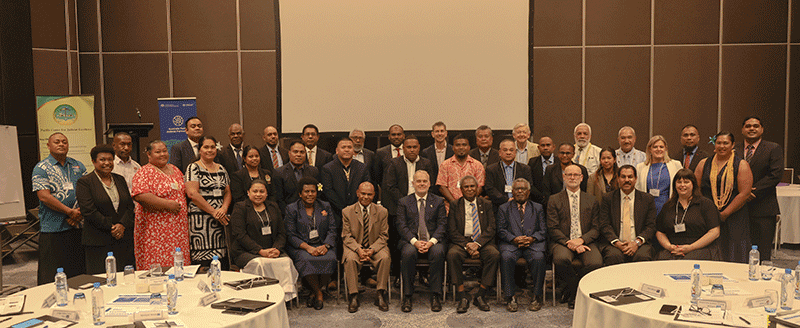
Together with the Pacific Centre for Judicial Excellence (PNG CJE), APJP brought together 34 judicial officers and registry staff from 13 Pacific Island nations to attend its inaugural three-day Regional Case Management Workshop. Held in Papua New Guinea the workshop's aim was to discuss challenges faced by participating courts, identify their causes and collegially develop locally workable strategies to address them.
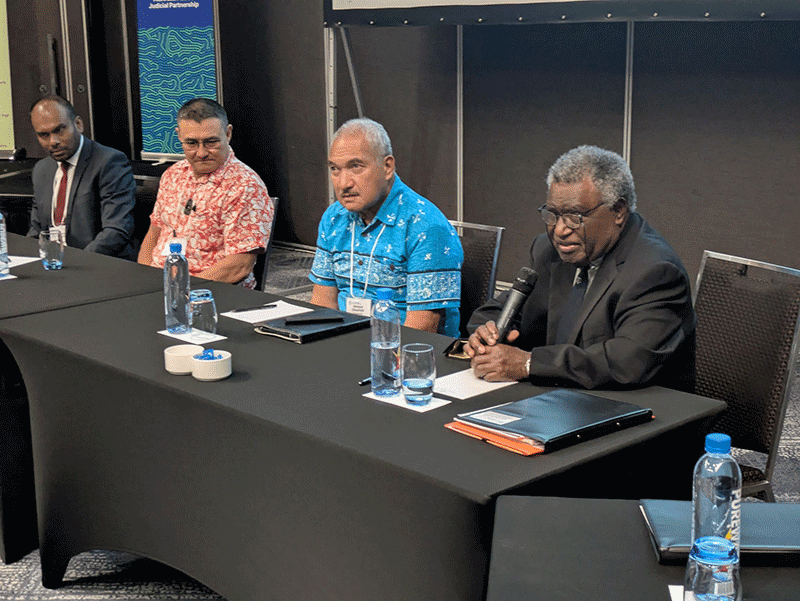
Chief Justice Gibbs Salika opening keynote address - ‘The Cost of Delay’ [link to speech] - emphasised the serious human, social, and institutional costs of delay, including how delay undermines the rule of law and harms both citizens and judicial wellbeing. Sessions thereafter focused on diagnosing systemic causes of delay and identifying practical, locally tailored solutions. Through structured group work and peer exchange, each jurisdiction developed a country-specific action plan to address priority bottlenecks and improve case resolution timelines. Bringing together judicial officers and registry staff from across the region enabled discussion about their complementary roles in ensuring cases are handled holistically, effectively and efficiently through the life cycle of the case, thus reducing backlogs and streamlining proceedings.